- Zen Online
- Posts
- When you know true nature, you know how to be in zazen
When you know true nature, you know how to be in zazen
"Zen," "True Nature," "Truth," "Reality," "What is real now"... these are all expressions pointing to the way it actually is now, which is the way it is in zazen. Issue #16 (February 2026)

Madoka Onizuka
February 01, 2026
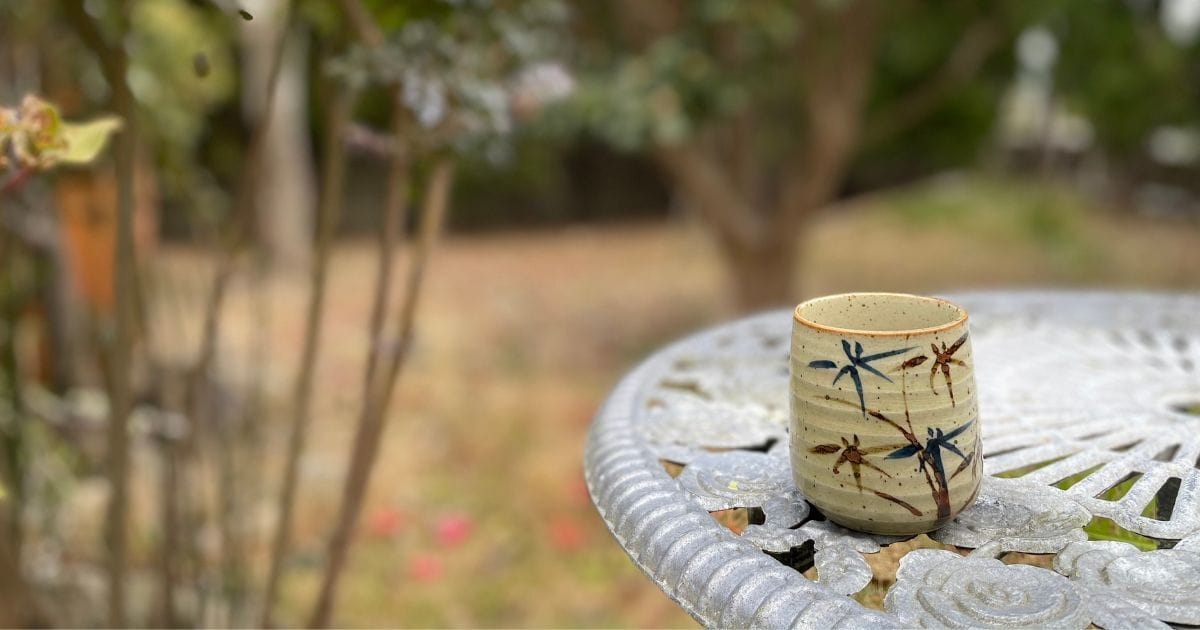
Table of Contents
To Our Dear Sangha
We are beginning the coldest month of the year here in Japan. What better way to spend time indoors than to sit in zazen!
This month’s newsletter reviews the essential questions: What is Zen? And what is the way to be in zazen?
Announcements
Upcoming Online Zazenkai Schedule (Japan time):
Zazenkai with Matsumoto-san:
Feb 16 (Mon) 8:00 a.m.-12:00 noon
Feb 28 (Sat) 19:00-23:00
March 8 (Sun) 19:00-23:00
March 16 (Mon) 8:00a.m.-12:00 noon
April 5 (Sun) 19:00-23:00
April 20 (Mon) 8:00 a.m.-12:00 noon
**Weekend times are generally more convenient for Europe, Africa, and Asia. Monday times are generally more convenient for N/S America and Oceania.
Thursday Zazenkai with Madoka:
Every Thursday at 9:00pm-10:00pm Japan time. Anyone is welcome!
Zazenkai reservations can be made here:
https://www.zen-online.info/reservations
Very Useful Time Converter to calculate zazenkai in your local time
https://www.timeanddate.com/worldclock/converter.html

”Teishō” is when a Zen master shows/conveys Truth to gathered students or disciples.)
(Translated by Madoka)
When you know “true nature = Zen,” you know zazen
What is it that the word “Zen” refers to? It refers to true nature, the way it actually is now.
True nature is ●▲■.
When there is ●▲■, the way it is is ●▲■.
The real ☆ is the actual ☆ itself.
Let’s confirm what true nature is. Make sure to actually confirm it for yourself. If you do not actually do this yourself, you will not see the way it really is and will only have an intellectual understanding. That means you will have learned something very different from what I am trying to convey.
Face straight ahead. Then turn your face to the left. As you do so, you can see that there is only the content of what is being seen.
It should also be evident that it is not necessary to use understanding to see the content of what is being seen. There is only what is seen now, and you cannot see anything before or after what is being seen now. In other words, there is no before or after. There is only what is being seen now itself.
Now, bring your attention to something you are hearing now. The content of hearing is heard exactly the way you are hearing it. And you only hear what you are hearing.
Please touch something. There is the actual sensation of touch, just as you feel it.
Touch something else. There is the actual sensation of touch, just as you feel it.
Take a sip of something. When you sip, there is the actual taste itself, exactly as it is.
Sip something else. When you sip, there is the actual taste itself, exactly as it is.
Smell something. When you smell, the actual smell itself is exactly as it is.
Smell something else. When you smell, the actual smell itself is exactly as it is.
Try thinking something. There is the content of thinking exactly as it is being thought.
Think something different. The previous thought is gone, and there is only the content of the current thought. Also, you can notice that there is only the content of the current thought, because you cannot think two or more thoughts at once.
With emotions as well, there is only the current emotion.
By doing the above confirmation, you can understand that there is only the present content of the five senses and the present content of consciousness (thoughts, feelings, emotions).
There is only the present content, which means there is no “one more way it is now.” So you can understand that the present content itself is Truth. And it is evident that true nature (the way it actually is now) does not require understanding with concepts.
Once you know that true nature is the way it is now itself, as explained above, you can sit just as true nature is. This is zazen. It is za (“sitting”) and Zen (“the present content of the five senses and the present content of consciousness” = true nature).
Inevitably, it is always true nature—the way it is now. So after taking a seated position, just be the way true nature is.
Because it is just sitting as true nature is, there is no need to create some kind of state using intention or thinking. You can see that zazen is not about trying to prevent thoughts from arising or trying to create and maintain a state.
When sitting just as true nature is, in the beginning, your attention will probably turn to the way it is in front of your eyes. But after a while, naturally, you will not be aware of true nature. At times like this, awareness of “this is ____,” or “this is the way it is” doesn’t arise. At times like this, there is just true nature itself.
When there is just true nature itself, the perception and cognition of true nature has stopped.
Therefore, when sitting, there is no need to focus your attention on true nature and continue to perceive and be aware of it.
When people start zazen, many are concerned about their thoughts. But being just as true nature is (seeing, hearing, bodily sensations, thinking, etc.), you come to understand that thinking can happen without intention, and that when thinking a thought, the previous thought has already gone. Once this is understood, you can stop seeing thoughts as problems and sit without being concerned about them.
It is important to be able to confirm if your sitting is truly zazen or not. Confirming for yourself will contribute to your confidence in sitting. The point to confirm is whether you are as true nature is, or not. In other words, that you are not intentionally trying to create and maintain something that you’ve imagined to be a Zen state.
Let’s go over some common misunderstandings first so that you do not needlessly worry about them during zazen.
1. “I am bothered by having too many thoughts.”
When thinking, “I have too many thoughts,” the reality is not that you are thinking many thoughts at the same time. You think “I have too many thoughts” because of memory, so just continue sitting.
2. “My thoughts continue on and on.”
There is only the present thought, and there are no continuing thoughts. Believing that there are continuing thoughts is due to memory.
When thinking “I’m hungry,” there is only “I’m hungry.”
When there is “what should I eat?” there is “what should I eat?”
When “I wonder if there are leftovers,” it is “I wonder if there are leftovers.”
Sometimes people ask if it is ok that thoughts keep coming up like this for even five to ten minutes at a time (the concern with getting lost in thought). “Five minutes” is not real. It is a mental construct. There is no need to be concerned about a mental construct that does not exist in reality.
3. “What should I do about my monkey mind?”
“Mind” is a mental construct. It does not exist in reality. It is a name given to the activity of thinking. Thoughts are things that arise, so there is nothing you need to do about them. By the time you think, “monkey mind,” the thoughts that you thought were monkey mind have already disappeared.
4. “When my mind is quiet, it is a good zazen state. When noisy, it is not a good zazen state.”
People become concerned with the quality of their perceived state when they do not understand that zazen is true nature itself.

Are some people simply incapable of satori?
The first time I remember hearing about the Buddha’s enlightenment was when I was 12 and my family visited Bodh Gaya, the place of Buddha’s enlightenment. I had no idea what enlightenment was, but was somehow really taken with the idea. I picked up 3 leaves that had fallen from the bodhi tree under which the Buddha sat. I pressed them in a notebook and drew a picture of the Buddha sitting under the leaves. I still have the drawing today.
It wasn’t until many years later, however, that I embarked on my own journey to know Truth. After starting zazen, it took me a couple years to understand that satori is not a state of consciousness. Once I understood, I hoped that satori was around the corner, but started to worry when it didn’t happen after a while. I started to wonder, maybe there are people to whom satori just doesn’t or can’t happen. Had my many years of education in English and a very strong sense of self made my brain unenlightenable? I asked Kando Roshi about it once in dokusan (Inoue Kando Roshi is Matsumoto-san’s teacher).
Me: Roshi, are there some people to whom satori just can’t happen? Does it have nothing to do with the person’s upbringing or personality traits?
Kando Roshi: Why do you worry about such things that are not even here now? (Roshi quietly picks up a tea cup, moves it to the left, and sets it down.)
I was struck by how simply he showed me what is here now. But I still had doubt.
Me: Ahhhh! …Right…!
I thought I probably shouldn’t be looking for words at that point, but I did anyway. I wanted to dispel as much of my doubt as possible. So I continued.
Me: Ok… so I am worrying about something that isn’t here now…But I can’t help but wonder if I will ever be able to really see Truth clearly.
Kando Roshi: Picks up the tea cup, moves it to the right, and sets it down.
I’ll leave it at that.
Please share our newsletter with anyone you think would be interested.
https://zen-online.beehiiv.com/subscribe
It is also possible to see past issues and to unsubscribe at any time.
Love and Gassho _/\_
True Nature = the way it is now